

• sliderimage

All posts by Andrew Wesley/h3>

We have started to analyse the client feedback for the Nottingham office, and are again pleased by the positive comments about the individual lawyers and the firm generally.  Although we could not set out all of the positve comments for all of the solicitors, a few comments properly reflect the general tone of those who replied to our request for client feedback.

One client commenting about a Magistrates’ Court case handled by Nick Walsh said ‘I found VHS solicitors more helpful than others.  The solicitor I have is very good at his job.  Very satisfied with the help and information throughout my case’.

Another commented that Nick was ‘understanding, non-judgemental and invaluable in [his] compassion’.  Further clients said of him ‘used previously in a case, brilliant service both times’ and ‘you took time to listen’.

Finbarr Hennessey, a Magistrates’ Court Advocate known for making extra efforts on behalf of his clients,  is described in similar terms by a number of clients – ‘The solicitor I have is very good at his job’, ‘A1 Service thank you’ and ‘Finbarr Hennessy is an excellent solicitor and needs no improvement’.

It is all the more pleasing to note that, despite moving firms to us when Campion & Co solicitors stopped undertaking criminal work that his clients found their way to us and continue to receive the high level of service from Finbarr that they had grown used to.

Senior Crown Court Litigator Caine Ward deals with a high volume of the most serious of cases where the stakes, in terms of outcome, are particularly high.  A similar theme is revealed within the answers to our requests for client feedback – ‘You took the time to listen to us’ and ‘you listen to people and take time to understand even when people get mad’.

Caine is described as ‘Professional, courteous, informative and friendly’ and providing ‘great service, great experience and very professional and friendly’.  As a result another client stated ‘I have recommended people to you’.  The latter is perhaps the greatest compliment, that a client has been pleased with the level of service received and referred others to us.

Derek Brown deals with clients in the police station and before the Magistrates’ Court.  He is described as being ‘comfortable to talk to and very supportive under the circumstances’.  He ‘couldn’t get better’ and ‘helped me understand what was happening’.

In one particular case, Derek was unfortunately unable to provide the usual continuity of representation, but the client view was that the firm offered a ‘good legal team, it was a very good service’.

Finally, Julia Haywood has received feedback that would be unsurprising for all clients that met her.  One client said ‘I thought you were fantastic from day one.  You were very supportive to my family before and after sentence’.  Another mentioned that he was ‘treated with respect and dignity at all times’.

Further clients found Julia ‘helpful and understanding’ and a solicitor who provided ‘a professional service’.

Additional client feedback can be found here and here.

VHS Fletchers would hope that all of these comments demonstrate that we are a firm that you can trust with any matters relating to criminal defence.  If you wish to speak with one of our experienced lawyers please contact your nearest office here or contact us by email here.
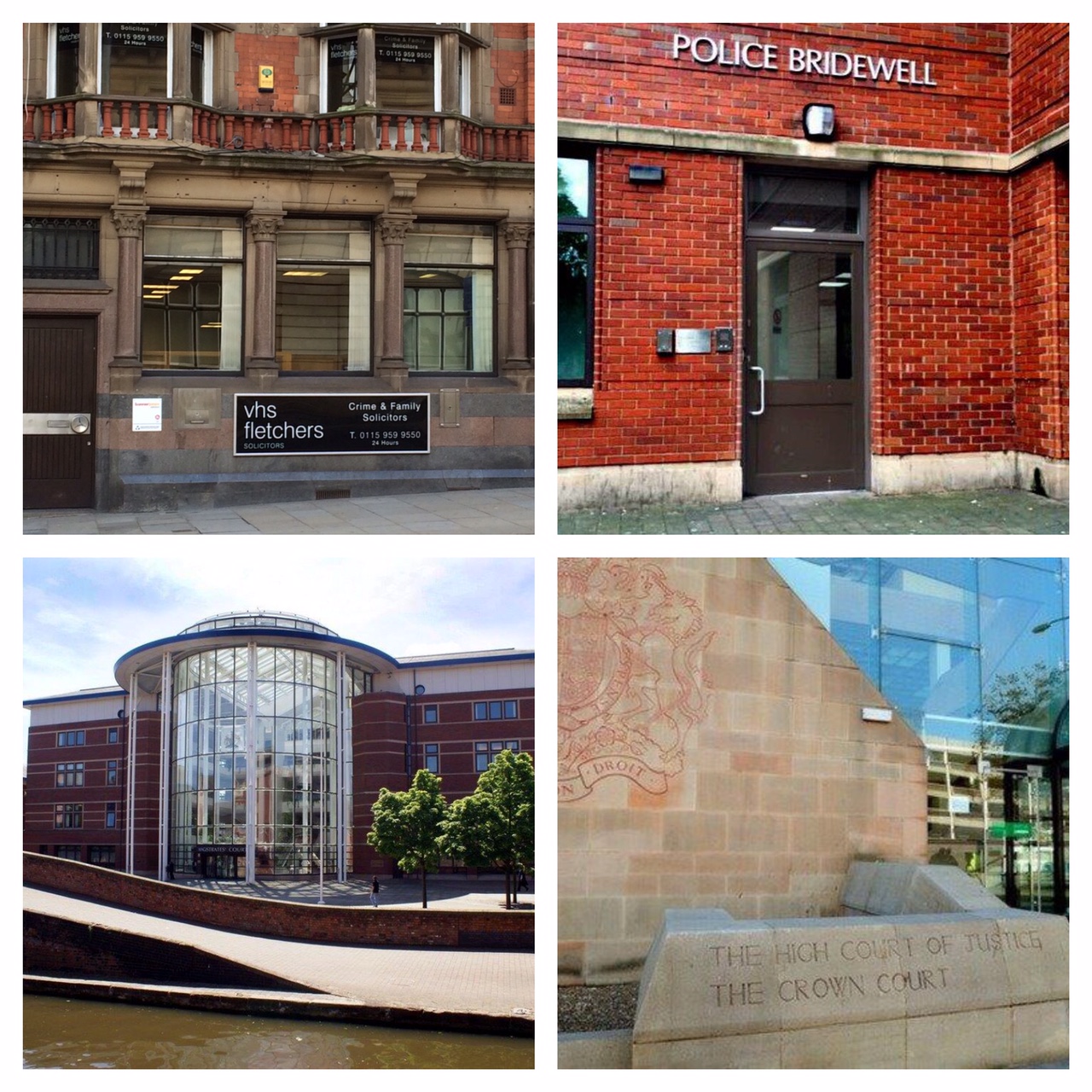
VHS Fletchers Nottingham

  • sliderimage

All posts by Andrew Wesley/h3>

A police interview as a suspect in a criminal investigation will be a daunting experience, even when you know that you are not guilty of the allegation being put.

Most people may not know what their rights are in this situation. o you have to speak to the police and answer questions? What happens if you don’t? What information do the police have to disclose before interview? What will happen if I don’t answer questions?

The image of what amounts to a formal police interview is now being blurred as police forces across the country are being encouraged to interview suspects by consent outside the police station.  This can often be in a person’s own home.  Although the aim is to make the process less time consuming for the police, voluntarily interviews  in these circumstance have the potential effect of making those interviewed take the process less seriously, and the safeguards that are present in the custody suite on arrest are removed.

At a police station a person being interviewed voluntarily or under arrest may well think the instruction of a solicitor wise.  The importance of legal advice if interviewed in your own home will be just as important.

What is said, or not said, in police interview will direct the course of the investigation and will have a significant effect on any Crown Prosecution Service review of the evidence.  The final importance of any decision made to answer police questions may not be fully appreciated by a suspect until a matter proceeds to court and trial.

The importance of legal advice is illustrated by a recent case.  The client was advised dealt by our experienced accredited police station representative Rob Lowe who is based at our Chesterfield Office.

Rob attended Chesterfield Police Station to deal with a client who had been arrested for allegedly breaching a court restraining order. This type of offence can be taken very seriously by the court, with a maximum sentence of 5 years imprisonment for a single offence.

As the client was represented at interview, Rob was able to speak to the interviewing officer to obtain the details of the allegation.  Such disclosure is not often given to an unrepresented suspect.  Brief detail revealed that Rob’s client was said to have sent text messages to the victim and attended an address where he was not allowed to be in breach of the court order.

Rob was not satisfied with that limited information  and was able to press the officer further about the evidence. The officer conceded that neither the alleged victim or the occupant of the address had confirmed in a statement that any offences had been committed.  No mobile phone records existed to support the allegations either.

Rob then had the chance to speak to our client and take his instructions before advising him about his obligations in the police station and the strength of the evidence against him. In this case there was no admissible evidence that could be placed before a Court.

Rob was able to advise the client that in the absence of admissible evidence there would be no case for him to answer.  As a result, the client was able, with confidence, to refuse to answer police questions.  The advice was proved to be correct when the police chose to take no further action in relation to the allegation.

There are several advantages to seeking legal advice wherever the police interview:

  • you have the benefit of an independent solicitor representing only your best interests
  • this advice and representation will be free of charge under the legal aid scheme with our firm
  • you are far more likely to receive disclosure of the evidence against you
  • you have an opportunity to see an expert opinion of that evidence
  • you have the benefit of ordering your thoughts and responses to police questions prior to interview if you have chosen to answer
  • alternatively, you can be confident in any refusal to answer the questions following full advice

This firm operates an emergency call out scheme 24 hours a day, 365 days of the year to provide representation in police interview.

  • If the police contact you to speak to them please call us immediately.
  •  If they arrive at your address and want to speak to you there and then insist on our attendance.
  • If you find yourself in the police station awaiting interview make sure you ask for us.

Our representation in all of those circumstances will be free of charge to you.

Contact us immediately.

chesterfield police station

  • sliderimage

All posts by Andrew Wesley/h3>

Nottingham solicitor Lauren Fisher shows that instructing the right advocate to mitigate your drink drive case on your behalf can make a real difference to the outcome of your case.

The first case was one of driving with excess alcohol.  The attention of the police was drawn to the car as it was being driven at speed and in an erratic manner and almost collided with the police vehicle.  When breathalysed Lauren’s client gave a reading of over three times the legal limit.

The sentencing guidelines for this offence can be found here.

Despite a starting point for the driving ban of between 23 and 28 months.  Following careful mitigation the disqualification was brought down to the minimum of 12 months.  The client was offered the Drink Drivers Rehabilitation Course which, if successfully concluded, will reduce the disqualification to 9 months.

In a second case, Lauren represented a client who faced an allegation of failing to provide a specimen of breath for analysis.  This was against a background of three previous convictions for driving with excess alcohol.

The circumstances of this offence were that the defendant had been identified as the driver of the vehicle after a collision.  He smelt of alcohol, had glazed eyes and slurred speech.  Instead of providing a specimen at the scene he became verbally abusive and tried to leave the vehicle, eventually being restrained.  He again refused to provide a specimen at the police station.

The sentencing guidelines are to the found here.  Owing to the circumstances the client apparently fell into the most serious sentencing bracket with a starting point of 12 weeks custody.  Lauren’s presentation of the mitigation available to her client persuaded the Magistrates to instead place the offending into the bottom category of sentence and, notwithstanding her record, her client received a £120 fine.

Legal aid is available for drink drive offences which means that Lauren’s representation was free of charge to these clients.  We will advise you on your eligibility.

  • sliderimage

All posts by Andrew Wesley/h3>

Two articles today raise concerns about the ability of Liz Truss to properly discharge her functions as Lord Chancellor.

A Times interview with Lord Faulks, ex-justice minister (who had served under the two previous Chancellors) seems less than enamoured with the appointment of Liz Truss as the first woman Lord Chancellor in 800 years.

Her promotion led to his resignation owing to her perceived inexperience and lack of the necessary ‘clout’ to stand up to the Prime Minister on behalf of Judges.

Truss’s appointment continues the pattern of appointment to the office of individuals who are not lawyers, leading to suggestions that this shows a low regard from Government of the justice system in general.  The current trend began with the appointment of the hapless Chris Grayling in 2012.  His successor Michael Gove appeared to spend much of his tenure undoing the mistakes of Grayling, while appearing to generate working relationships with sectors of the profession and setting out welcome plans for prison reform.

Lord Faulks expressed concerns that it fall to Truss to ensure that adequate funding was provided for the courts, and importantly that the rule of law is upheld across Government.  The appointment appears to run counter to the conclusion of the Lords Constitution Committee who in 2014 stated that the Lord Chancellor should be a politician with significant ministerial or other relevant experience and with sufficient authority, and without an eye to a political career.

In that regard, while being pleased that the post has been awarded to a woman, Lord Falconer expressed concerns.  He stated that it was worrying that Theresa May “has appointed an ambitious middle-ranking minister unlikely to challenge the PM if she thought it might damage her career.”  Damningly he claimed ‘Liz Truss has not the experience or gravitas and gives every impression of only wanting to climb the greasy pole.”

An on-line article in the Legal Business Blog talks of the appointment being an ‘underwhelming one, given her track record in voting in favour of legal aid cuts [and] her perceived lack of intellectual rigour.”  The final question posed is ‘How did Dominic Grieve not get the job?’


UPDATE:

In an opinion piece in The Times today (behind a Pay Wall unfortunately) Lord Falconer goes further and sets out his view that the appointment of Liz Truss is unlawful.  The relevant legislation is the Constitutional Reform Act 2005.  Part 2 sets out a prohibition against a recommendation for Lord Chancellor unless the nominee is qualified by experience.  The experience listed on her website doesn’t seem to make the case very strongly.  Is the appointment open to challenge?

FURTHER UPDATE:

The Tory chair of the Commons justice select committee has become the latest senior political figure to question the credentials of newly appointed lord chancellor and justice secretary Liz Truss.  Story to be found here.

  • sliderimage

All posts by Andrew Wesley/h3>

Chesterfield solicitor Ben Strelley  was instructed by a 15 year old client appearing before Chesterfield Youth Court.  The client faced an allegation of being drunk and disorderly in a public place.  Upon being spoken to by the police it was said that he then assaulted two police officers.  He had not been in trouble with the police before.

Ben’s client had chosen not to have a solicitor with him when he was interviewed by the police.  As a result of not receiving early advice on the strength of the evidence he had not accepted the statements of the police when interviewed.  He had therefore been charged rather than consideration be given to an out of court disposal.

Upon taking instructions at court, Ben identified that his client was not disputing the account given by the police.  The reality was that he was so drunk that he could not remember what had happened and had no reason to challenge the allegations.

In those circumstance, Ben felt it appropriate to argue that the matter should be referred back to the police for consideration of an alternative disposal.  Despite the pressure from the court and prosecution to make progress by way of a guilty plea, Ben was able to persuade the court that the adjournment should be granted and detailed written representations were made straight away.

Unfortunately, as is often the case, when the matter was back before the court the prosecution claimed that the client was not eligible for an alternative disposal, although no reasons why were give.  Again,  in the face of pressure from the prosecution, Ben made a compelling argument for a further adjournment which was granted.

Ben correctly identified the relevant issues and fought on behalf of his client in a climate where pressure is always on the solicitor and client to make progress and not delay matters.  Ultimately his persistence paid off and the client was placed on an  intervention program under the supervision of the Chesterfield Youth Offending Team and all of the charges were withdrawn.

Ben’s client also had the benefit of being represented under the legal aid scheme which means that the advice and representation received was free of charge to him.  Had the client chosen to have Ben’s representation in the police station as well this outcome could have been achieved earlier, again with the benefit of free legal aid.

© 2026 VHS Fletchers Solicitors | Authorised and Regulated by the Solicitors Regulation Authority Number 488216